


Assistive Technology Faire
This 14th annual event will be conducted on-campus in-classroom and will provide an opportunity for students to get an up-close look at a variety of devices and learn about available programs from product vendors and service agencies.

Tikkun Olam Makers
TOM at Stanford – TOM Community Managers – Lucy Caroline Hiller & Temple Dahla Landry
Tikkun Olam Makers (TOM) is a Stanford student club whose members design and build personalized prototype devices that address everyday challenges experienced by individuals with disabilities and older adults. Rooted in the value of Tikkun Olam – repairing the world – TOM turns empathy into action and ensures that no one is left behind by the lack of an assistive technology device.
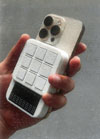
PocketDot
PocketDot, Inc. – Adil Jussupov
PocketDot is a Braille display that provides visually impaired and blind individuals with private and convenient access to texting, web browsing, and other textual communication with their mobile phones.

Silicon Valley Independent Living Center
SVILC Assistive Technology Specialist – Joe Escalante
Silicon Valley Independent Living Center (SVILC) is a cross-disability, intergenerational, and multicultural disability justice organization that creates fully inclusive communities that value the dignity, equality, freedom and worth of every human being. SVILC maintains a lending library of assistive technology so consumers may borrow a device free of charge and try it before buying it, use it to compare similar devices, or to use while a personal device is being repaired.

BeeLine Reader
BeeLine Reader, Inc – Nick Lum
“BeeLine Reader is a software tool that improves reading ability by displaying text using a color gradient that wraps from the end of one line to the beginning of the next. (Example) This gradient pulls the reader’s eyes through the text, making reading easier. This approach is especially helpful for readers with dyslexia, ADHD, and various vision impairments. Thanks to the Schwab Learning Center, BeeLine Reader’s tools are available for free to all Stanford students.”

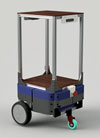
Jeeves
Harmony Robotics – Sandeep Dutta
“Jeeves is an assistive robot that carries up to 80 lbs. with ease, autonomously navigates the user’s home – including scheduled trips to specific spots – follows the user around through gesture-driven operation, features a touchscreen-responsive controller, and offers many more capabilities. This everyday helper transports belongings – including laundry, groceries, and dishes – helps locate items at home, serves as a mobile storage unit, learns and adapts to the user’s routine movements, and offers much more. Jeeves supports a more self-sufficient and independent lifestyle for individuals with special needs, wheelchair users, older adults, and many others. In care facilities, Jeeves facilitates round-the-clock resident monitoring and assists with the transport of food and essential care items to residents.”

Stretch 3 Mobile Manipulator Robot
Hello Robot, Inc. – Vy Nguyen, Occupational Therapist
“Hello Robot’s Stretch 3 is an inclusive mobile robot empowering people of all ages and abilities to live independently and thrive in daily life. Our open-source model ensures we build a robot for good in collaboration with a global community of researchers and industry partners. Hello Robot has been co-designing Stretch 3 with persons living with severe motor impairments as they use the robot to enable their functional independence and performance in their everyday activities while reducing caregiving demands. With Stretch 3, individuals can interact with their environment, such as turning on light switches, opening doors, picking up items from surfaces or off the ground, self-feeding, socializing with friends and family, and even visit museums. Operating the robot is made accessible by having the individual use their assistive input devices to interact with a web-based interface launched on either their computer, tablet, or mobile device.”
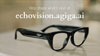
EchoVision Smart Glasses
AGIGA – Huasong Cao, Andy Pan, Stanley Cao
EchoVision by AGIGA is a purpose-built wearable designed to foster independence for the blind and visually impaired by transforming visual data into real-time audio. By moving beyond the handheld phone, users can engage with their surroundings hands-free to perform daily tasks like reading printed materials, identifying people, and navigating public transit. The device provides continuous environmental awareness through its “Live AI” mode and, for more complex situations, offers a seamless connection to human-in-the-loop services for immediate remote assistance.
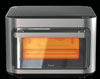
Brava Smart Oven
Brava Home, Inc. – Travis Rea, VP Sales & Marketing and Zac Selmon, Head of Product
“Brava’s Smart Oven enables safe, independent cooking with a fast, light-based technology. With new and evolving features designed specifically for assistive technology users, Brava is ideal for the blind/low vision, intellectual and developmental disability and/or limited mobility communities. It simplifies meal prep with automated features, guided recipes, and a comprehensive mobile app. Continuous software updates enhance functionality and accessibility, ensuring Brava meets diverse needs and constantly improves the cooking experience for individuals seeking culinary self-reliance.”

MO/GO
Skip – Claire Stewart
“Skip is a small start up company developing powered wearable technology they call movewear, dedicated to enhancing human movement and accessibility. With a focus on innovation and real-world impact, Skip aims to transform how people interact with their environments through advanced technology. Their first product, MO/GO, is one part robot, one part technical pants – a motor-powered movement assist exoskeleton embedded in lightweight hiking pants. Think of it as an e-bike for hiking: enabling users to tackle elevation like never before by providing a boost to the leg muscles on the way up and supporting the knees on the way down.”
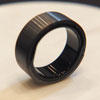
Lotus Ring
Lotus – Dhaval Patel (Founder and CEO)
For people with disabilities, Lotus’ wearable ring controls objects pointing. With Lotus, control anything a wall switch controls, like lights and fans – and even the TV – from wherever you are in the room. Unlike Alexa, there is no rewiring, no apps, and no internet.

Yahoo!
Yahoo Inclusive Design – Betty Troy, MS, CPACC – Inclusive Designer / Accessibility Specilaist / UX Researcher
“At Yahoo, we believe digital experiences should be accessible, usable, and enjoyable for everyone. That’s why we incorporate feedback from people with a wide range of access needs, including users of screen readers, magnification tools, refreshable Braille displays, switches, and those with cognitive accessibility needs. Partnering with real users helps us learn, innovate, and ensure our products are both inclusive and delightful to use. Visit Yahoo’s table to explore our products hands-on. Try navigating the Yahoo Homepage using your voice, switches, or a screen reader. Browse articles in the Yahoo News app with screen magnification, or compose an email on Yahoo Mail using a Braille keyboard..”